Start with the honest answer
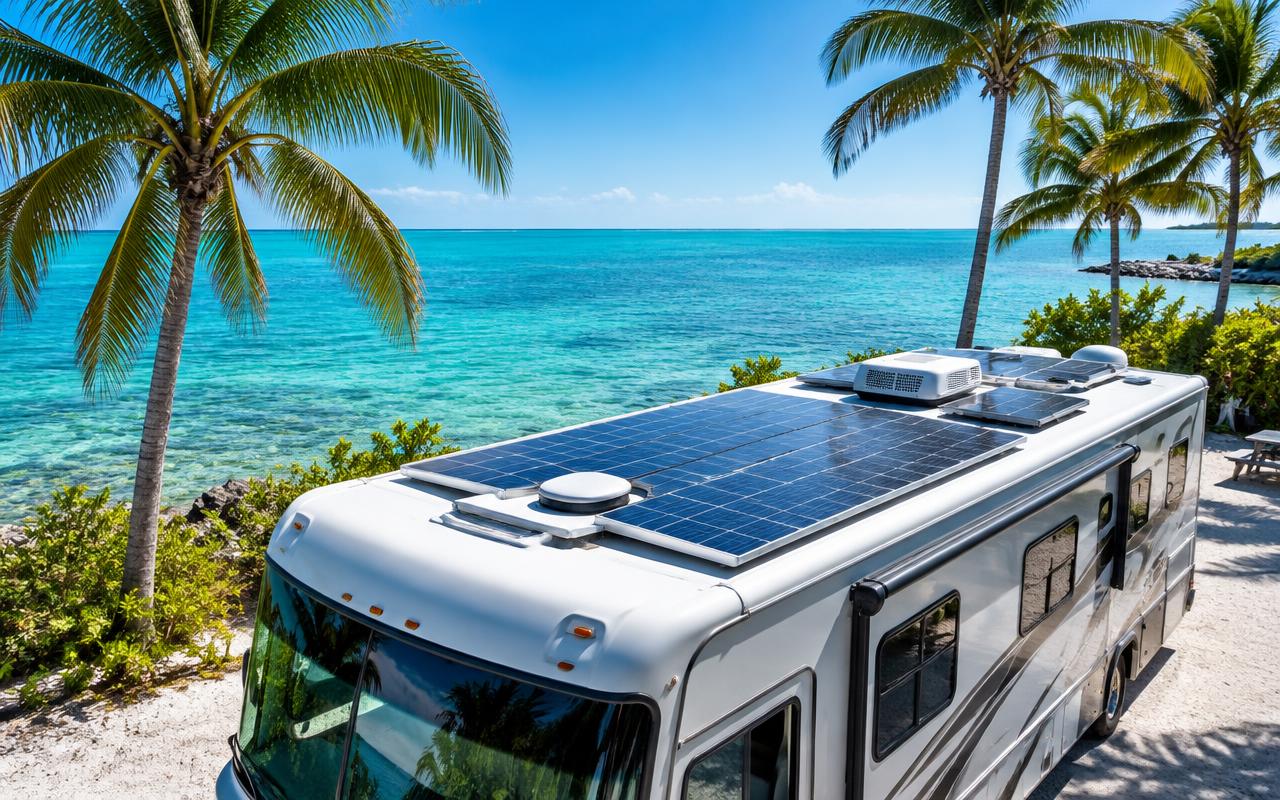
An RV air conditioner can run from a solar-supported battery system, but solar panels do not power it directly in the simple way people imagine. Panels charge batteries through a controller. The batteries feed an inverter. The inverter creates the 120V AC power the rooftop unit needs. Every step must be sized for the load.
The Keys provide strong sun, but they also demand long AC run times. Clouds, roof shade, heat, panel temperature, and the hours after sunset all change the balance. A system that runs an AC for a short midday period is very different from one expected to cool the coach through a humid night.
Four parts have to agree
Panel capacity determines how much energy can be collected when conditions cooperate. Battery capacity determines how long a large load can continue when production drops. The inverter must handle the running load and the brief starting surge. Cables, fuses, disconnects, and the battery management system must safely carry high current.
A soft start can reduce the compressor's starting demand. It does not reduce the energy needed to keep cooling for hours. Efficient operating habits still matter: shade the coach, close unused spaces, keep filters clean, and avoid letting the interior become extremely hot before cooling begins.
Hybrid setups are often practical
Many RVers get better results by combining solar with shore power or a generator rather than trying to eliminate every other source. Solar can carry everyday 12V loads and recover part of the energy used by the AC. The campground connection or generator can cover long cooling periods and poor-weather days.
An inverter/charger with load support may blend available shore power with battery power, depending on the equipment. That can help at a weak pedestal, but only after the pedestal, coach wiring, and protection devices have been checked. A hybrid plan is often more useful than a headline claim about running entirely on solar.
Plan around your actual day
List the AC model, inverter rating, battery capacity, solar wattage, and the other loads running at the same time. Decide whether the goal is a brief lunch-hour cooldown, several afternoon hours, or overnight comfort. Those are different projects.
If you are unsure about cable size, battery current limits, inverter surge capacity, or safe overcurrent protection, call a professional. High-current DC systems can produce serious heat when connections are loose or undersized. A good design sets realistic expectations before equipment is purchased.
Need help with your RV in the Keys?
GBoyz Mobile RV Repair comes to your campsite from Mile Marker 75 to Key West.
Call (877) 722-0218