The change you notice first
A lead-acid bank can show a healthy voltage and still struggle when a heavy load starts. Lithium iron phosphate batteries hold their voltage more steadily through much of the discharge cycle. Lights stay consistent, pumps sound normal, and an inverter has a firmer supply. That does not create unlimited energy. It makes more of the rated capacity practical to use.
Lead-acid batteries also prefer shallow cycles. Repeatedly drawing them very low shortens their useful life. A lithium bank generally provides a larger usable share of its rated capacity, so two banks with the same number on the label can behave very differently in camp.
Weight and space
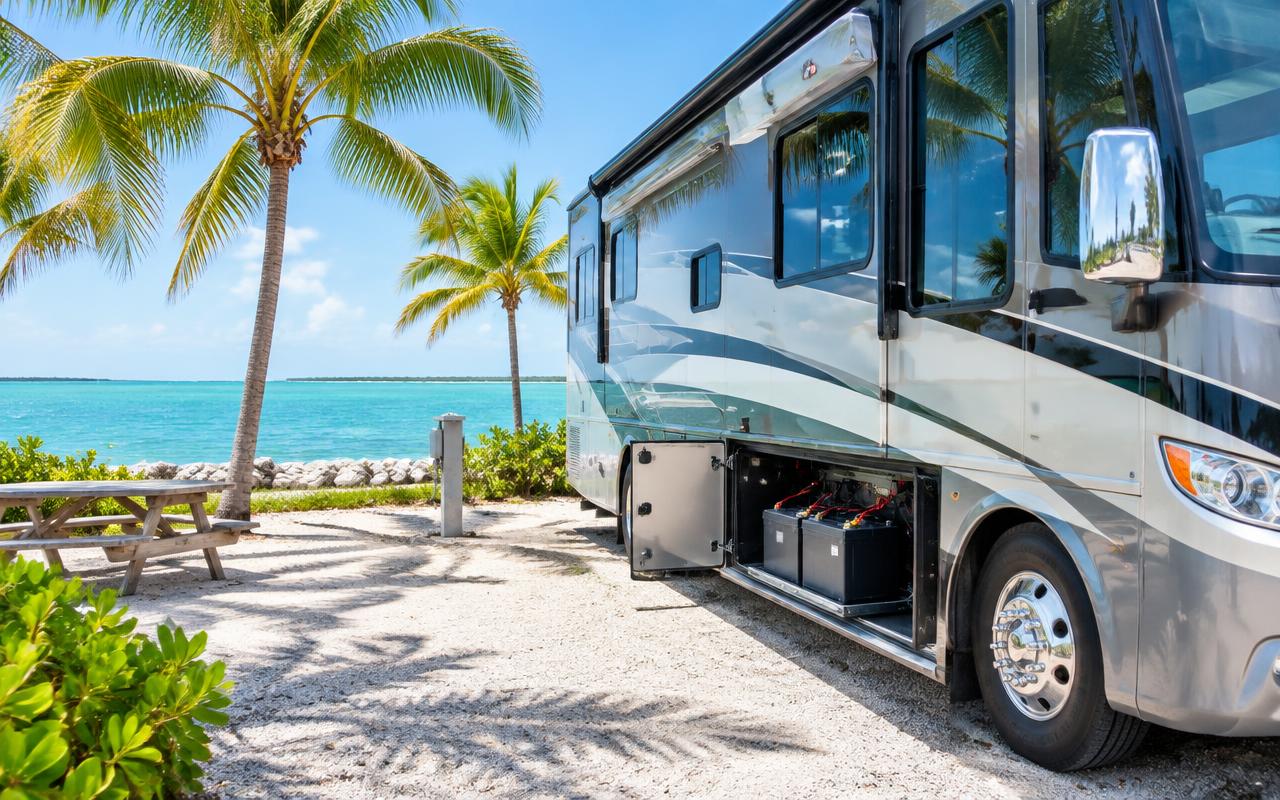
Battery compartments have limits. Lead-acid batteries are heavy, and larger banks add weight quickly. Lithium can provide comparable usable energy with less weight and often less space. That matters in a motorhome already carrying water, gear, and supplies for a long stay in the Keys.
The compartment still needs secure mounting, protected cables, proper fusing, and room for service. A lighter battery is not permission to leave it unsecured. Before changing chemistry, inspect the tray, cable routing, ventilation needs, and the condition of every connection.
Charging is a system
The battery is only one part of the upgrade. Shore-power converters, inverter/chargers, solar controllers, and engine charging equipment each have a charging profile. Some existing equipment supports lithium settings. Some does not. A battery may appear to work with the wrong profile while never reaching a proper charge or while causing repeated shutdowns.
A battery management system protects the cells when voltage, current, or temperature leaves a safe range. If it disconnects, the coach can suddenly lose 12V power. Good system design considers how every charging source responds to that event and makes sure cable size and fusing match the expected current.
What you can check
Write down the model numbers on your converter, inverter/charger, solar controller, and battery monitor. Note the wire size and fuse rating between the battery and inverter. Think honestly about the loads you expect to run and how long you stay away from shore power. These details are more useful than choosing a battery by capacity alone.
A lithium upgrade makes the biggest difference when it is matched to the way you camp. If you mostly remain plugged in, the benefit may be convenience and lower maintenance. If you rely on solar or run an inverter often, usable capacity and faster charging can change the day-to-day experience. Call a professional when the charging equipment, high-current wiring, or protection plan is unclear.
Need help with your RV in the Keys?
GBoyz Mobile RV Repair comes to your campsite from Mile Marker 75 to Key West.
Call (877) 722-0218